Our Featured Homilies
They had carried a grudge so long that they had forgotten. It had become like furniture in their house. It was just part of their lives.
One leaned into the other and said, "You know, I am sorry. I was wrong." And the other calmly said, "Yeah, I know. And so was I."
What struck me was not the precision of the words. It was what happened afterwards. The light in their faces. Their faces changed,
both of them, simultaneously.
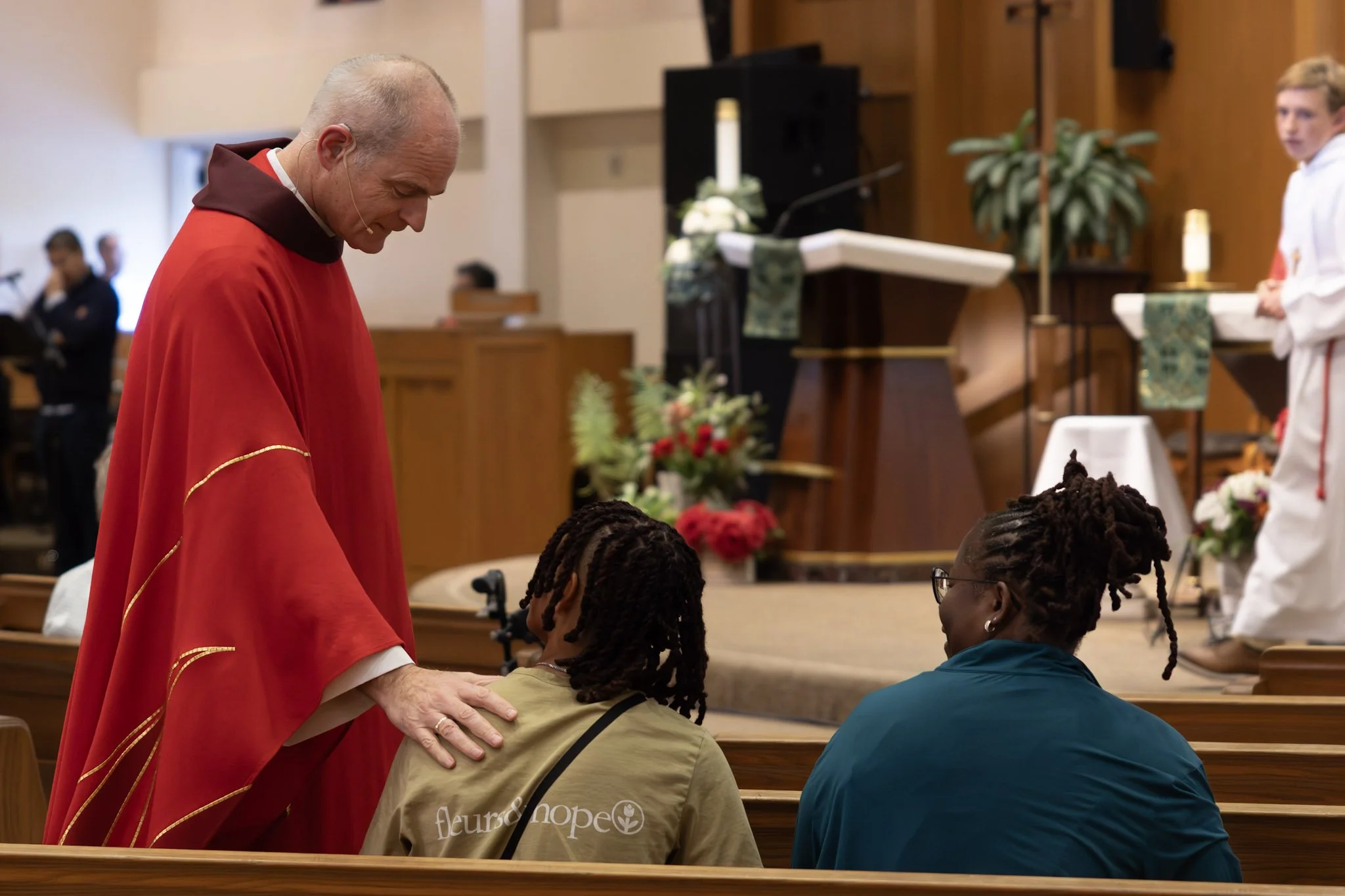
One of the great gifts we have as priests is to visit people in their homes and in their areas of vulnerability, in their hospital beds, in their convalescent homes. And when we get there, yes, we bring oils, often bring communion, and we bring prayers. But what we receive is often something quite spectacular. We see relatives, loved ones, not doing anything spectacular or heroic, but they are present. They are simply present to their loved one, holding their hand, taking care of simple deeds. Sometimes conversations, sometimes not, but there is a sharing of love.
And in this worst place of human suffering, he came to a profound realization. Who was it among them that survived? It was not the strongest. It was not the smartest. It was the one who had meaning in their life. And the meaning had to be greater than the suffering.
I have a friend taking one of those GLP-1 drugs for the last year, and he just looks fantastic. He has shed pounds he has carried for 10, 20, 30 years. He is now walking, running, he has started to do weights. It has transformed his life completely.
Whether it is because we know what young people are like, or what old people are like, or because of the color of their skin, or their accent, or their community. LGBTQ, married, divorced, immigrant, you name the list. We put people into categories, and we prejudge them. Now, in one sense, we are not bad people. We are just a little blind when we do that. We do not do it intentionally, but our brains work that way.
We are the only human species that has survived hundreds of thousands of years. There were many human species, but only we remain. The reason, according to him, is not muscle strength, not our tools, and not even our brains, but because of our ability to tell a story. Storytelling. It is literally wired inside of us. It is what enables us as human beings to gather…